Attributed to Jacob Willemsz. de Wet the Elder (c. 1610-1671), Paul and Barnabas at Lystra
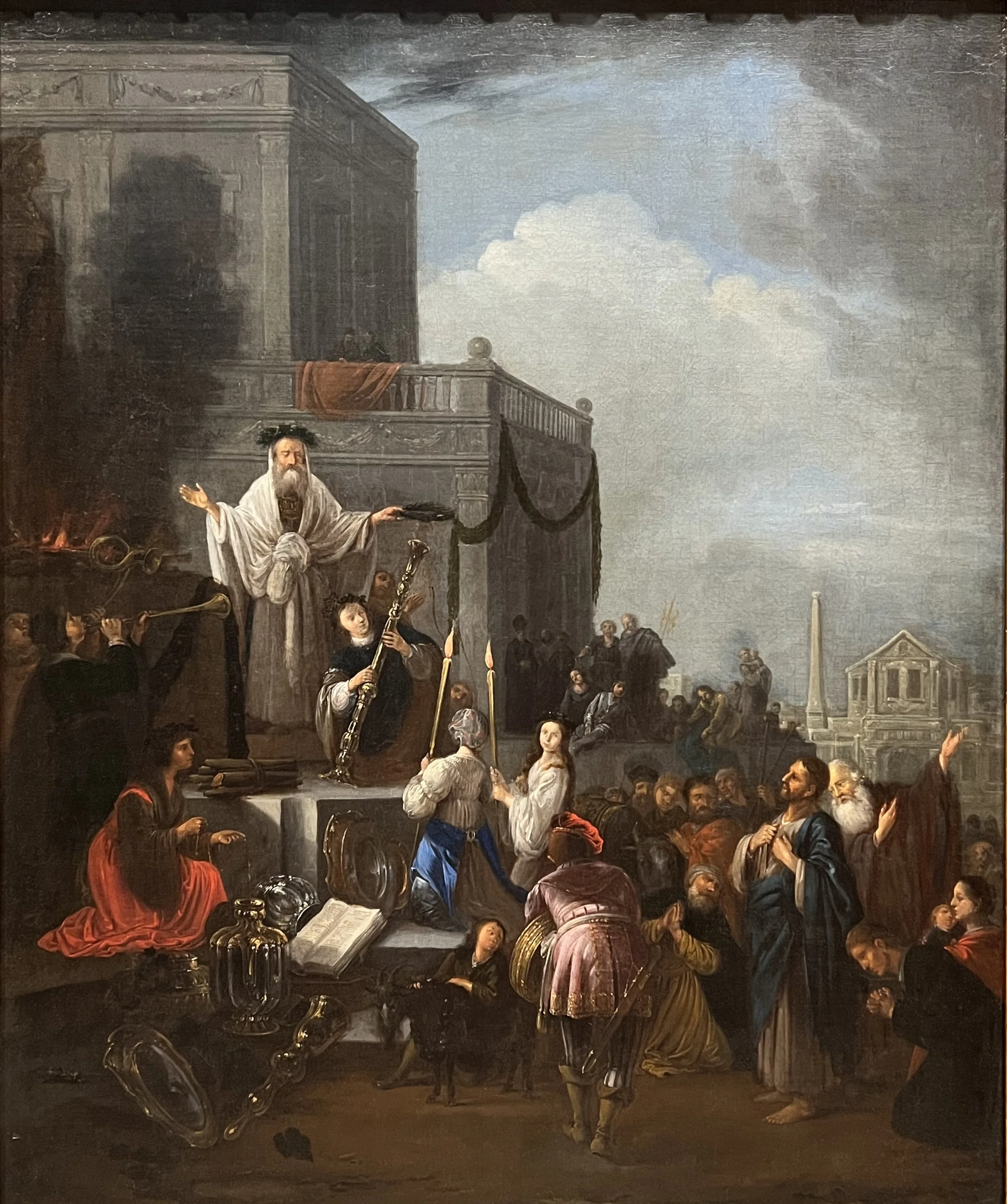
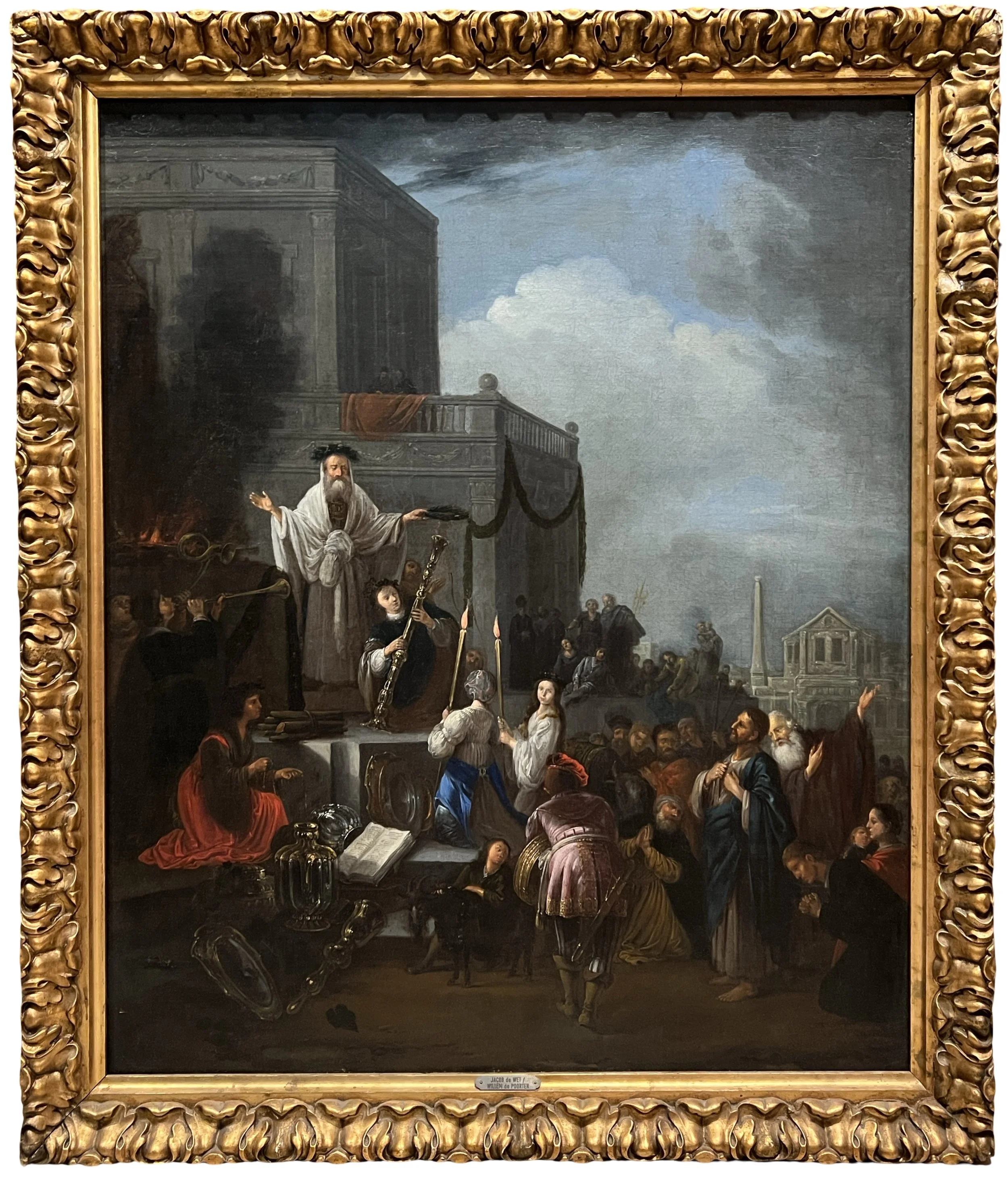
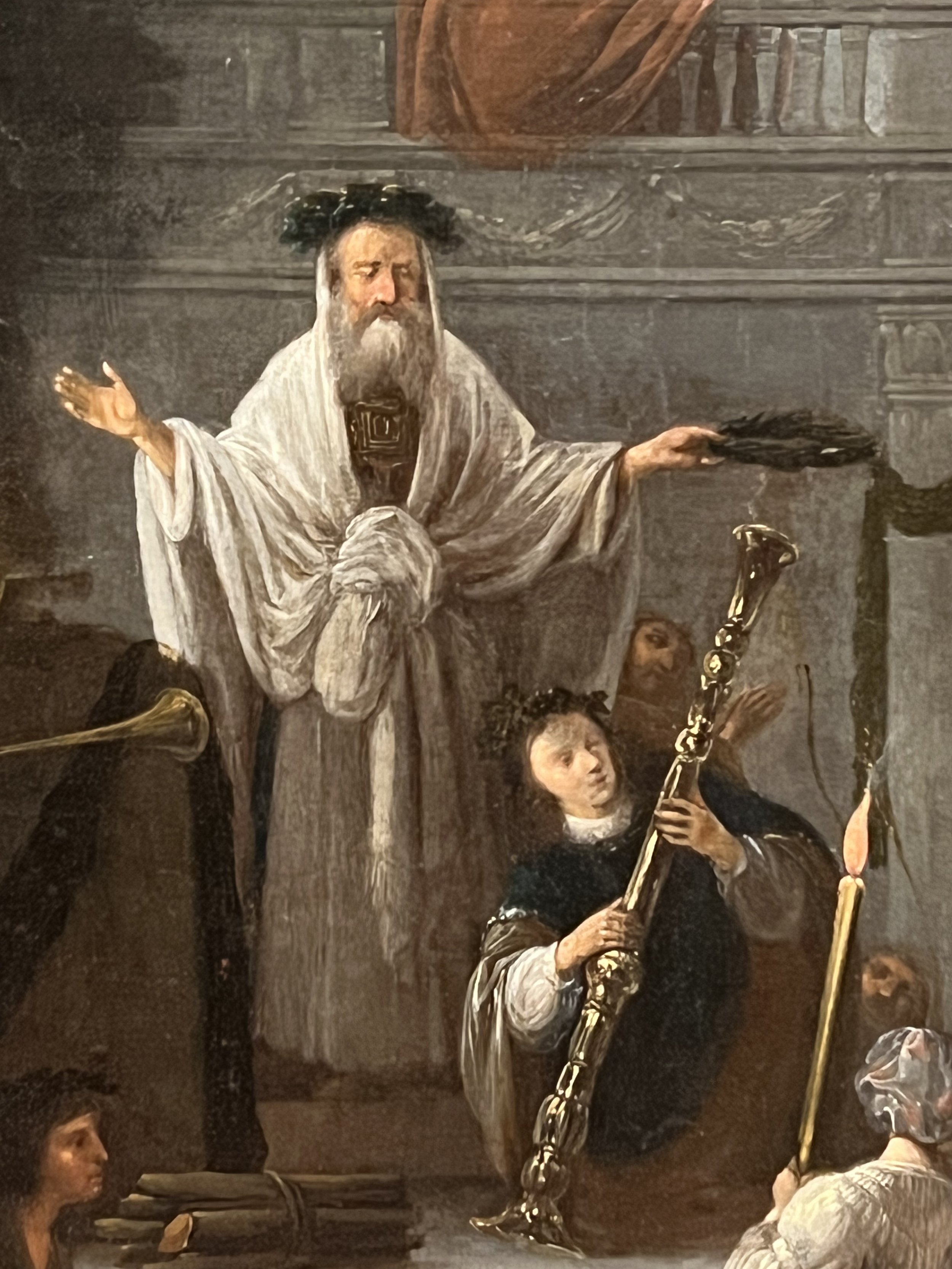
Attributed to Jacob Willemsz. de Wet the Elder (c. 1610-1671), Paul and Barnabas at Lystra
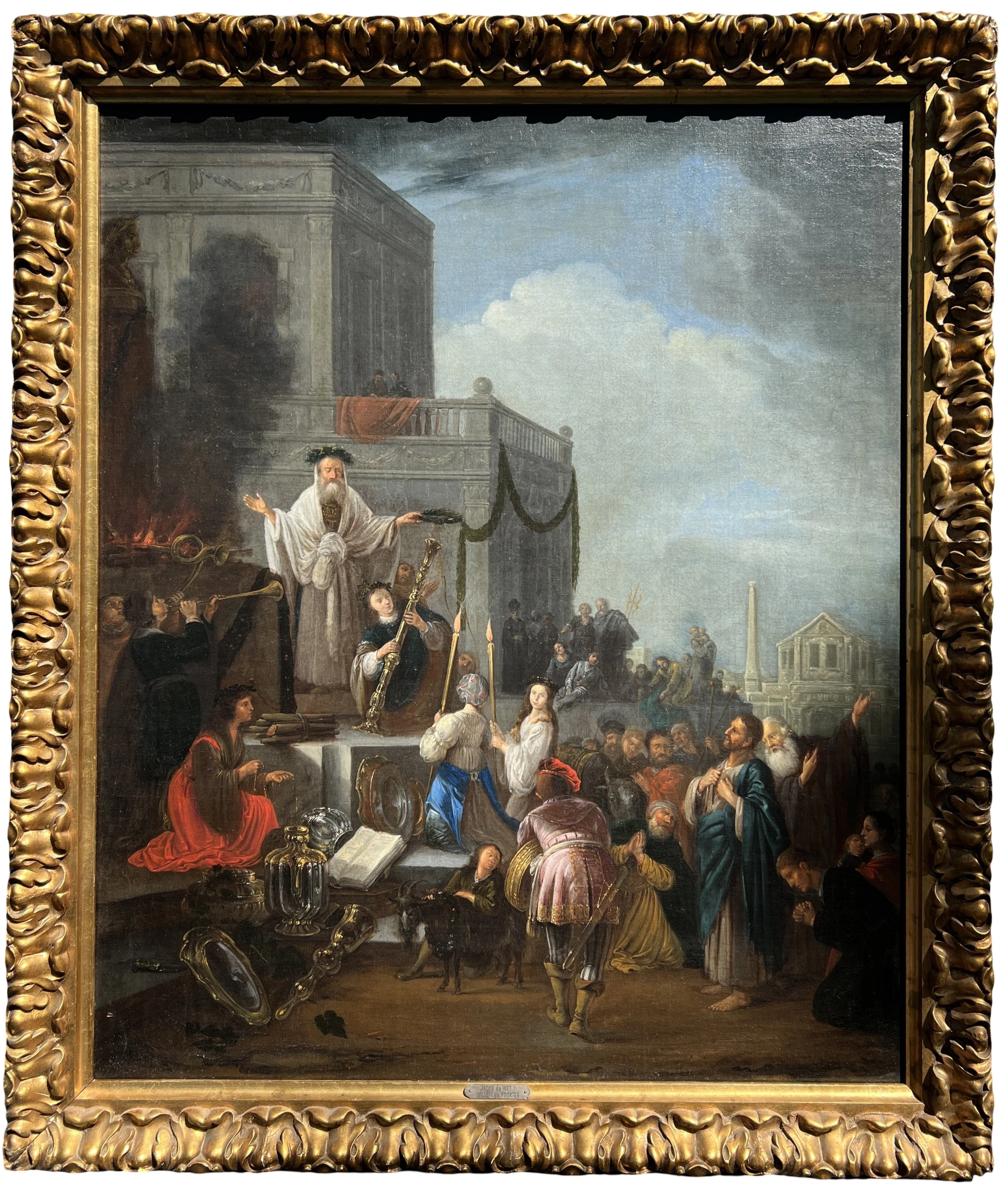
A remarkably detailed Dutch Golden Age history painting depicting Paul and Barnabas at Lystra, an episode from the Acts of the Apostles (Acts 14:8–18), tentatively attributed to the Haarlem painter Jacob Willemsz. de Wet the Elder.
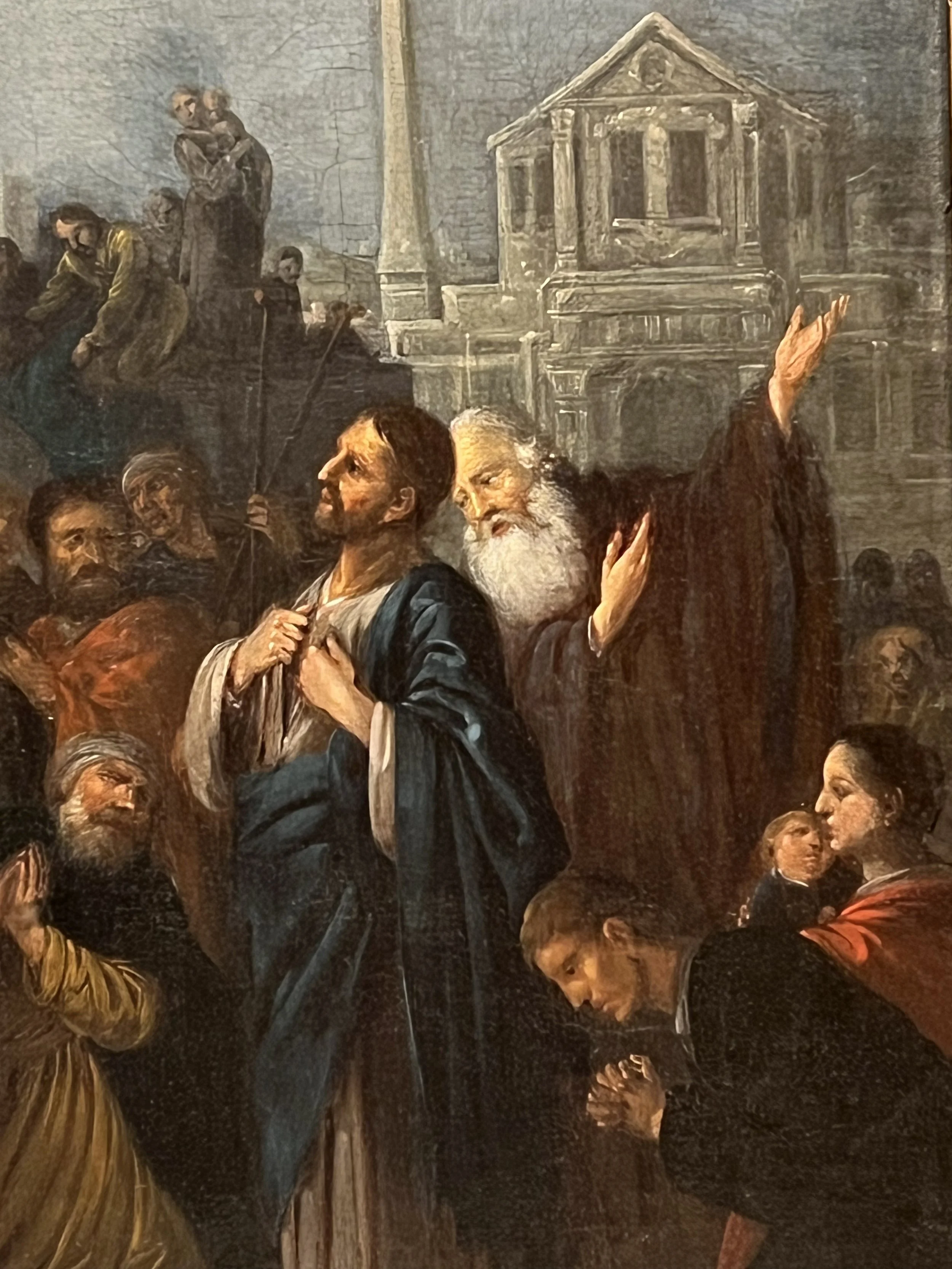
After Paul miraculously healed a man who had been unable to walk from birth, the inhabitants of Lystra mistook Paul and Barnabas for the pagan gods Mercury (Hermes) and Jupiter (Zeus). The priest of Jupiter consequently prepared an elaborate sacrifice in their honor. Horrified, the apostles attempted to prevent the ceremony and urged the crowd to turn instead to the living God.
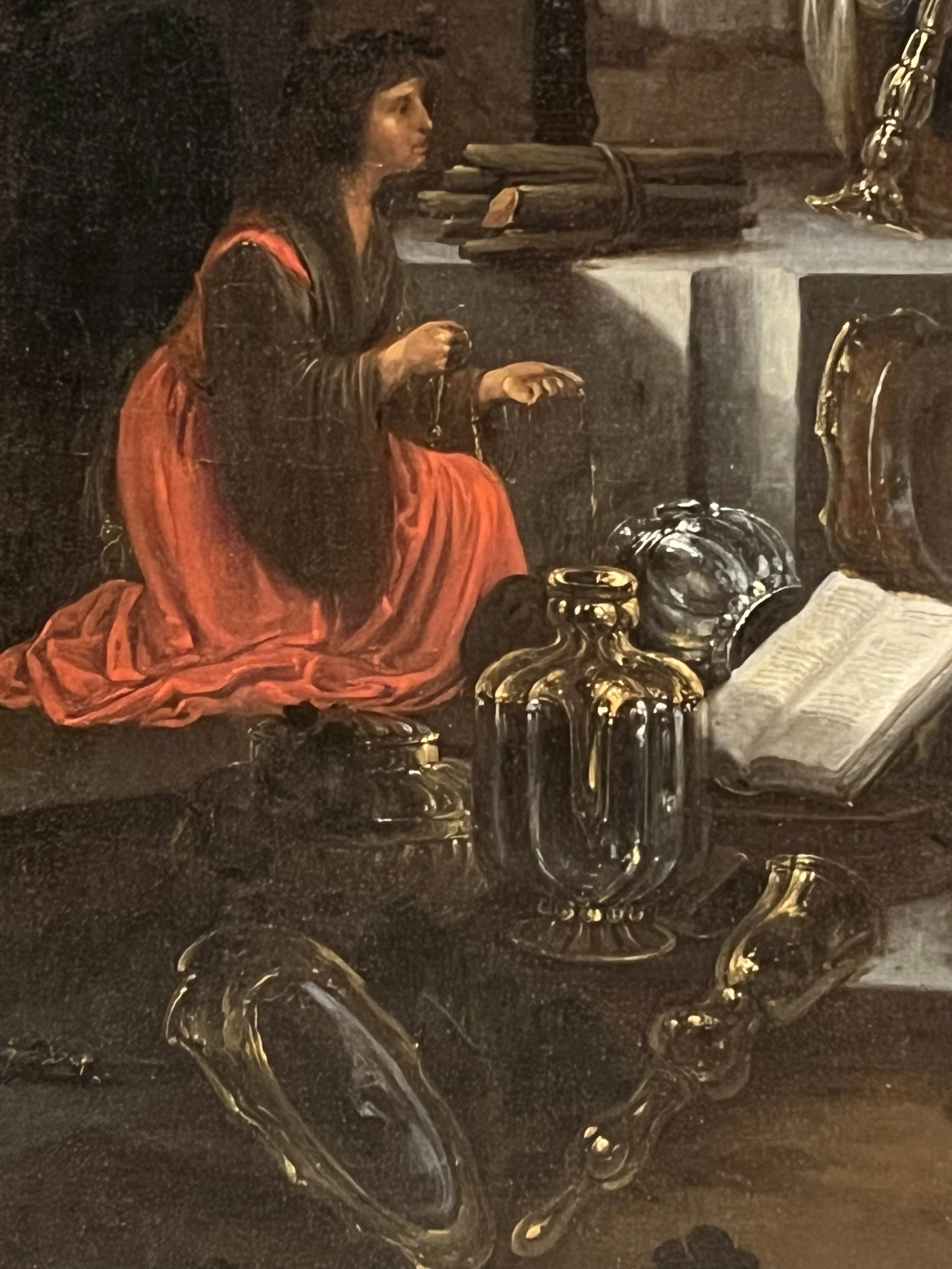
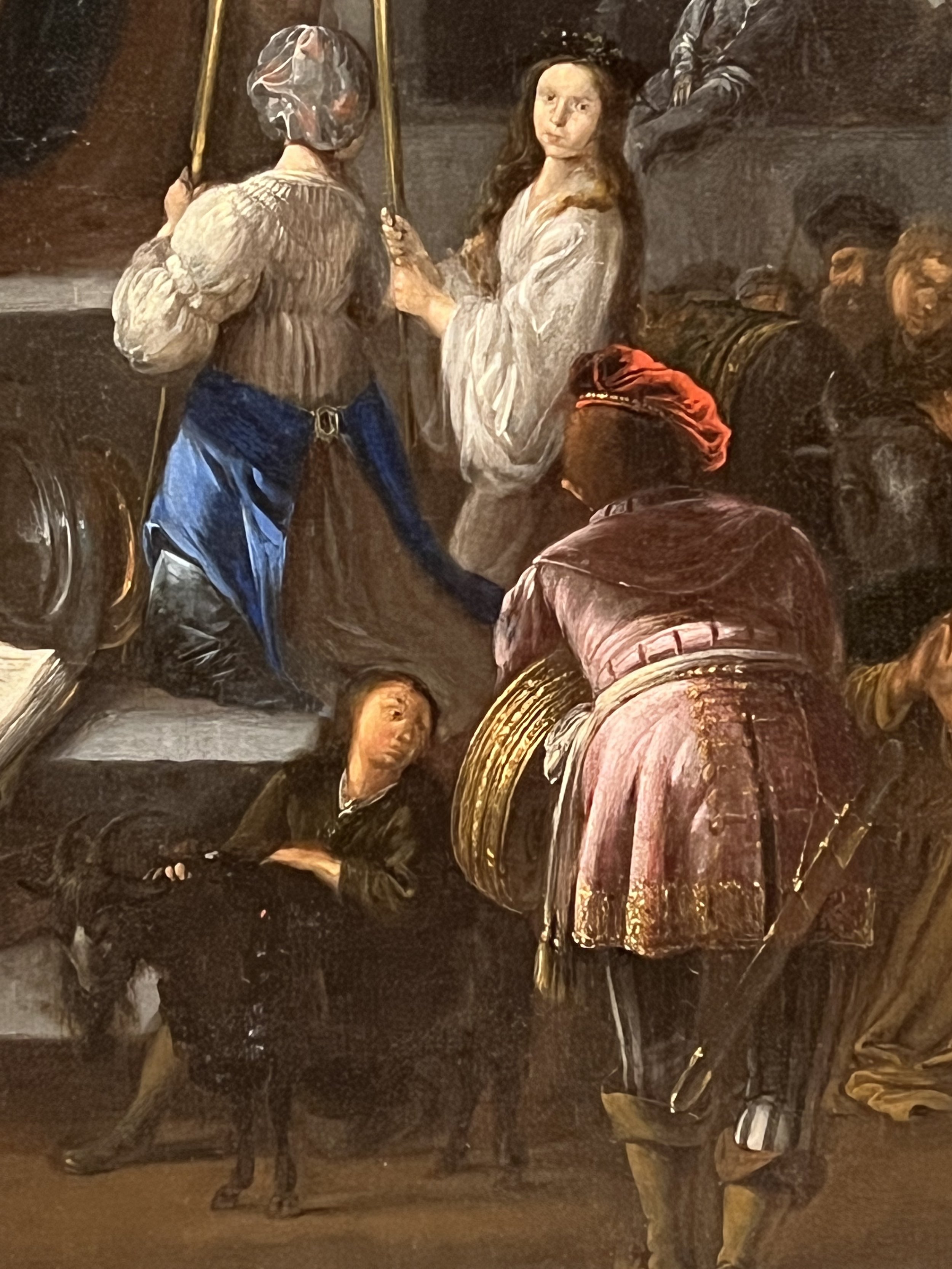
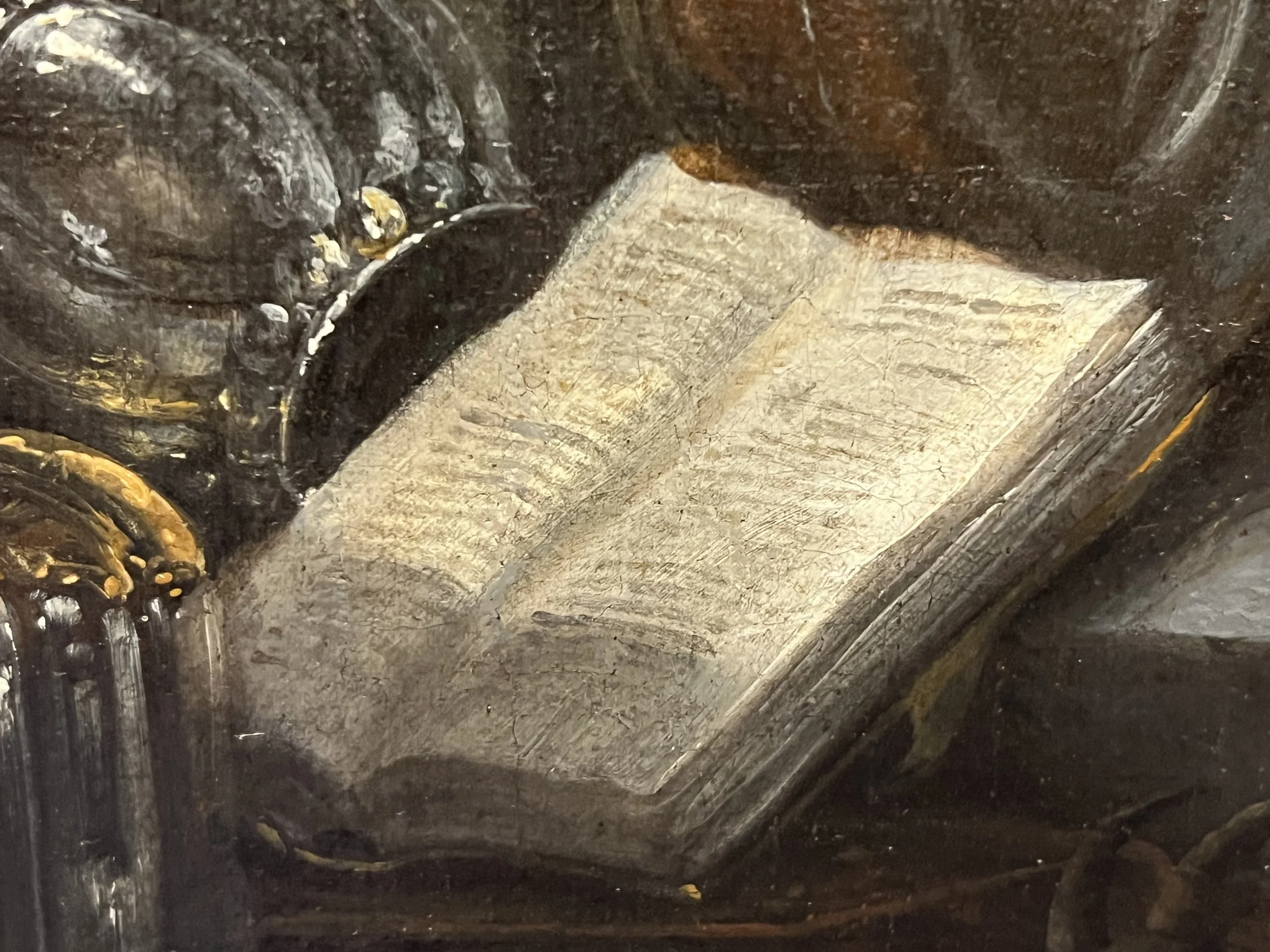
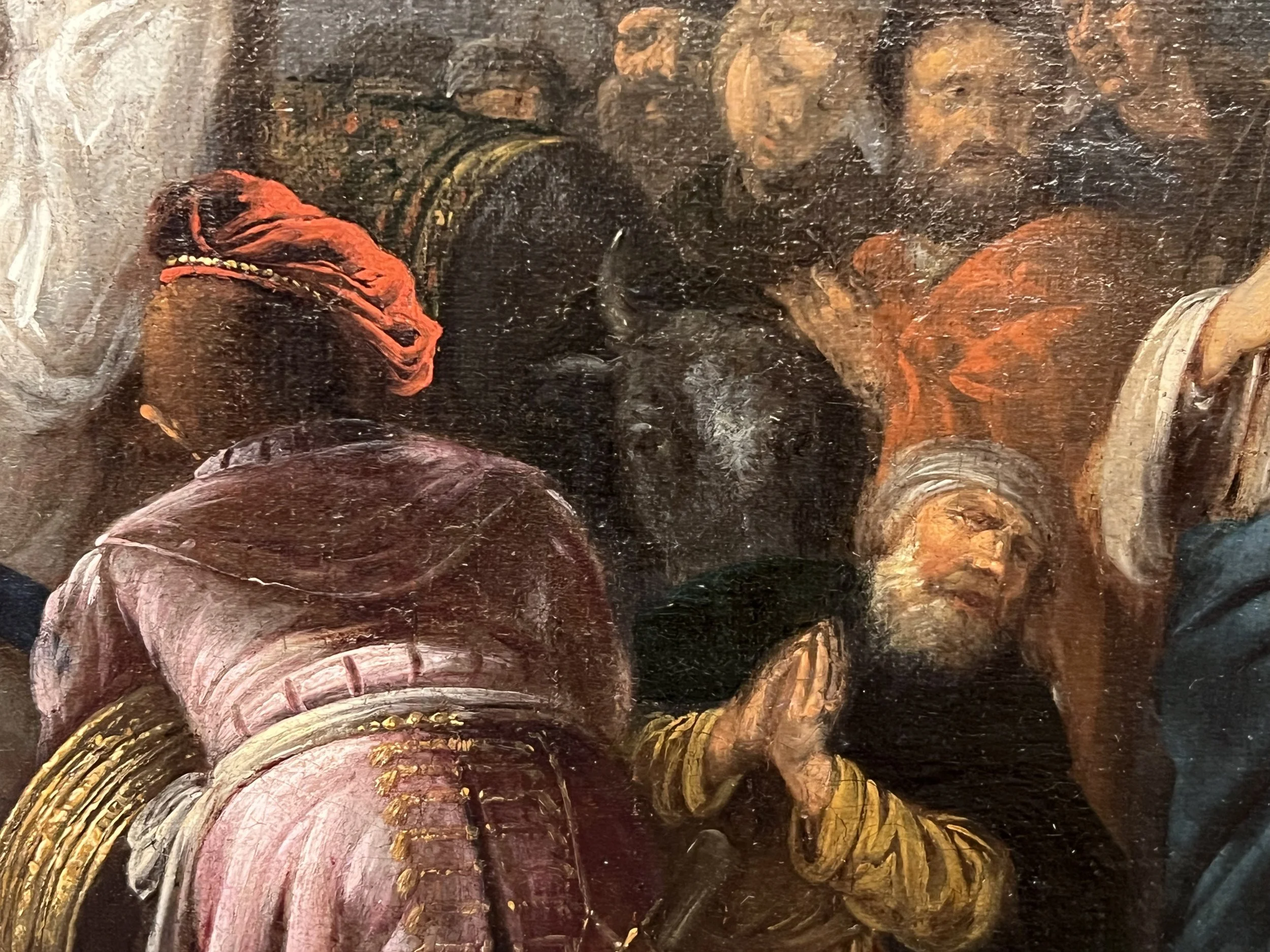
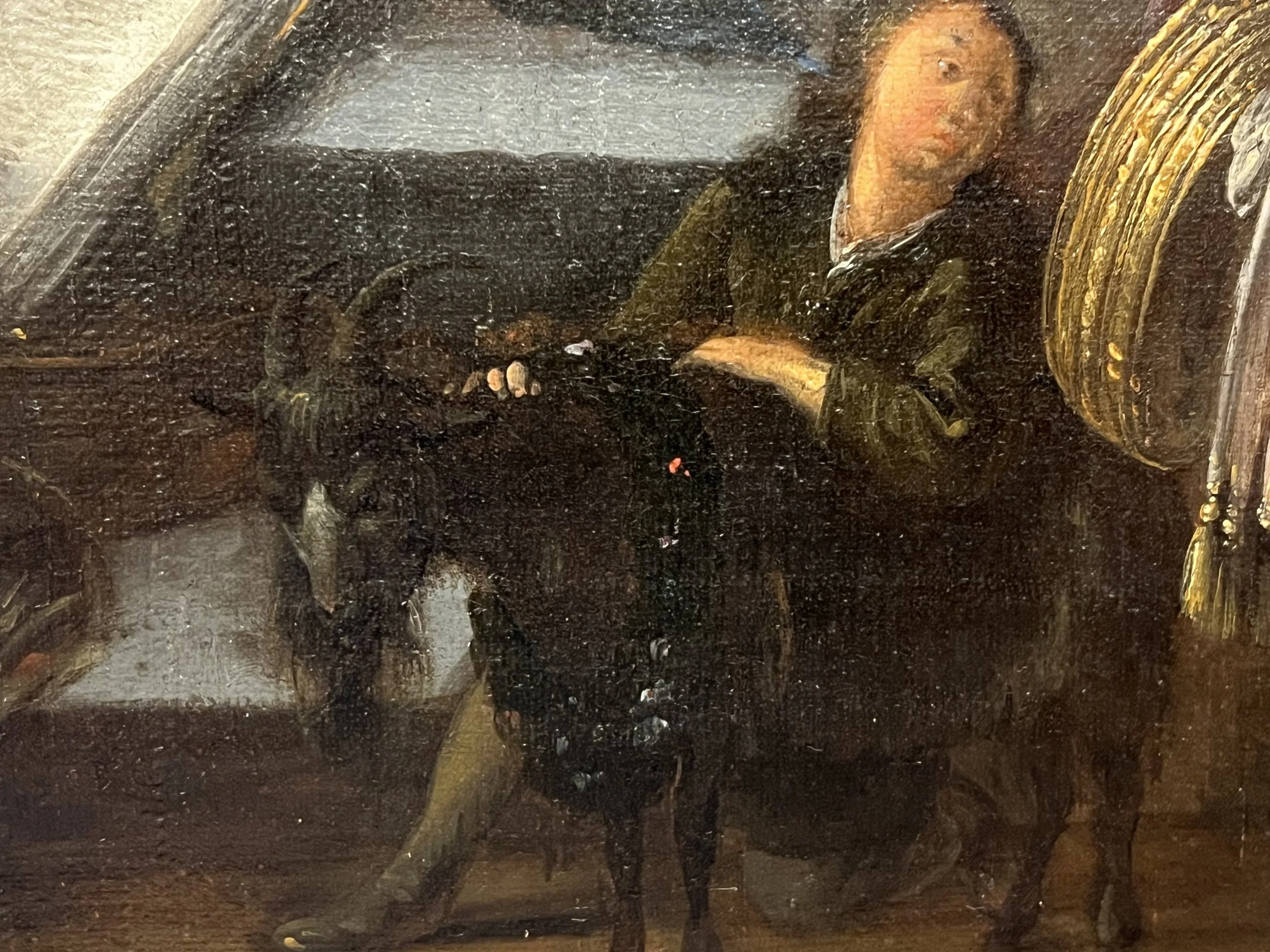
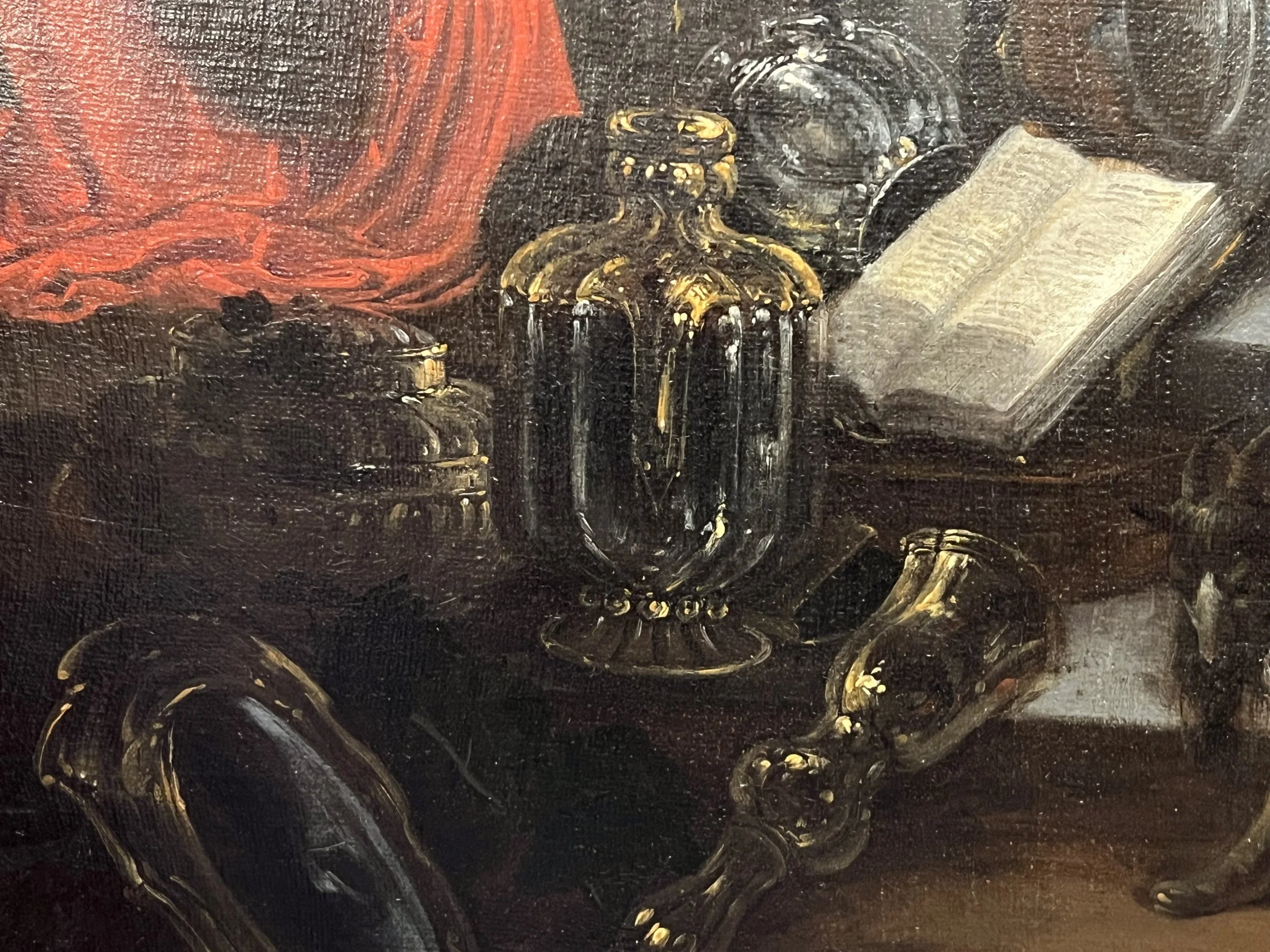
The artist has constructed the narrative with exceptional richness. At left, the white-robed pagan priest presides over an elevated altar surrounded by ceremonial vessels, an open book, sacrificial implements, burning fire and bundled wood. Attendants prepare the ritual while Paul and Barnabas protest at right.
A particularly fascinating detail appears immediately behind Paul: the man whom Paul has just healed raises his now-unnecessary crutches above the crowd, quietly identifying the miracle that precipitated the entire event. The artist thus combines successive moments from the biblical narrative within a single composition.
Monumental classical architecture, an obelisk and distant temple establish ancient Lystra, while numerous individually characterized figures, richly colored draperies and carefully rendered reflective vessels demonstrate the painter’s considerable technical ambition.
The tentative attribution to Jacob Willemsz. de Wet the Elder, a Haarlem history painter strongly influenced by Rembrandt, is particularly noteworthy in light of De Wet’s documented interest in this exact subject. A signed painting of Paul and Barnabas at Lystra by De Wet, measuring 67 × 87 cm, is preserved in the Ashmolean Museum, Oxford. Although compositionally different, the Ashmolean painting likewise emphasizes the pagan priest, monumental altar, sacrificial preparations, classical setting and elaborate ritual apparatus. The signed Ashmolean work is documented in Werner Sumowski’s Gemälde der Rembrandt-Schüler.
De Wet was principally a painter of biblical, historical and mythological subjects, frequently employing numerous small-scale figures, muted tonal passages and dramatic illumination influenced by Rembrandt. Christie’s similarly characterizes him as a history painter specializing in religious and mythological subjects and documents his practice of producing different versions of the same biblical narrative.
Provenance:
Former collection of Dr. Edward Bilpuch, Chapel Hill, North Carolina, longtime director of the Triangle Universities Nuclear Laboratory; subsequently private collection, United States.
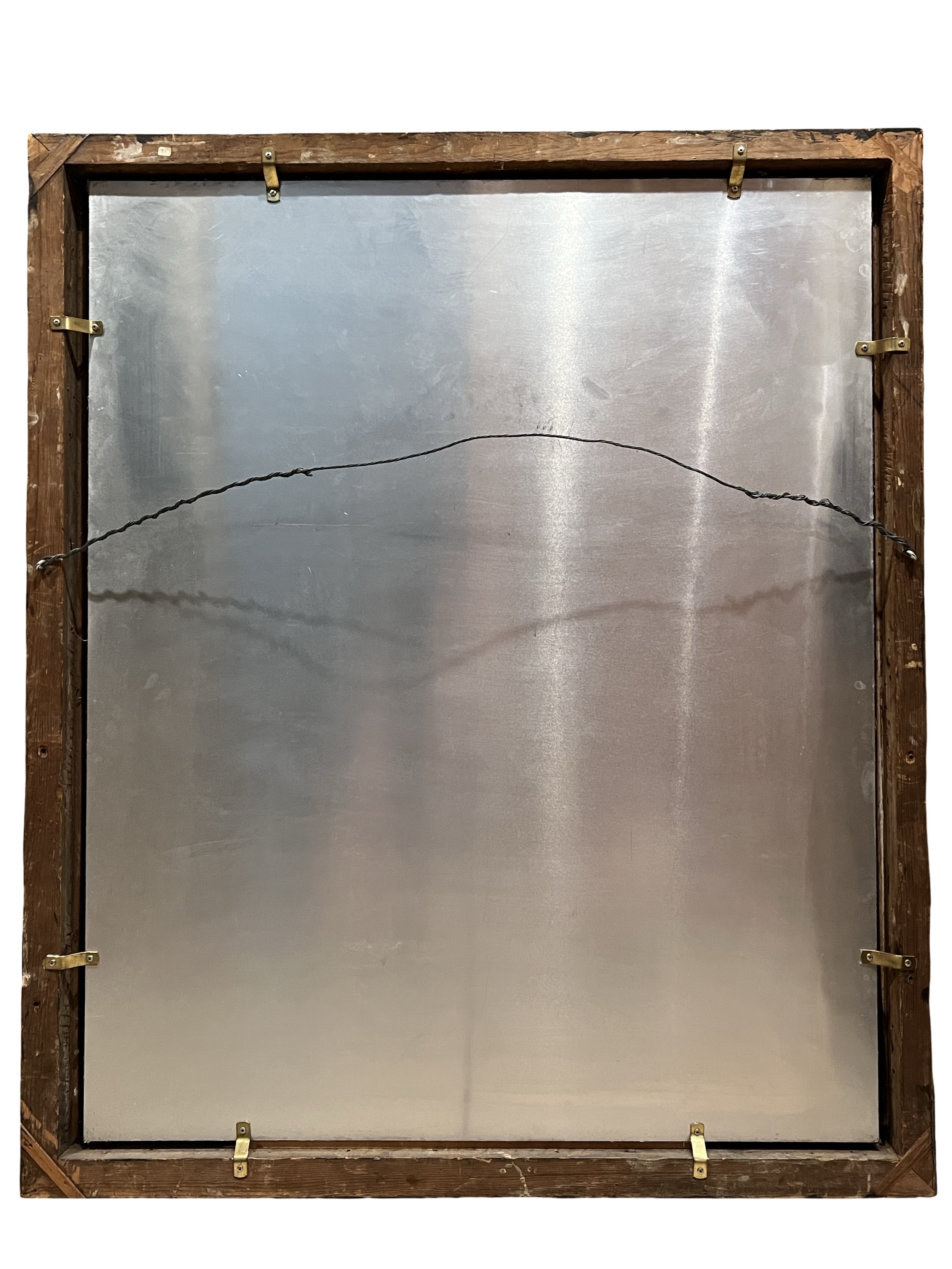
The painting is in very good condition and has been adhered to an aluminum panel during a previous restoration. It measures 35.8” x 29.5” (91 × 75cm) and with the carved gilt wood frame, measures 40” x 34 1/4”.
This item will be shipped in a wooden crate. It comes with FREE Shipping in the United States, all other areas would incur additional shipping charges.